Why the Walk to the Ground Becomes Part of Matchday
The walk to the ground can turn an ordinary journey into part of matchday. Plan a route that builds anticipation while leaving room for delays.
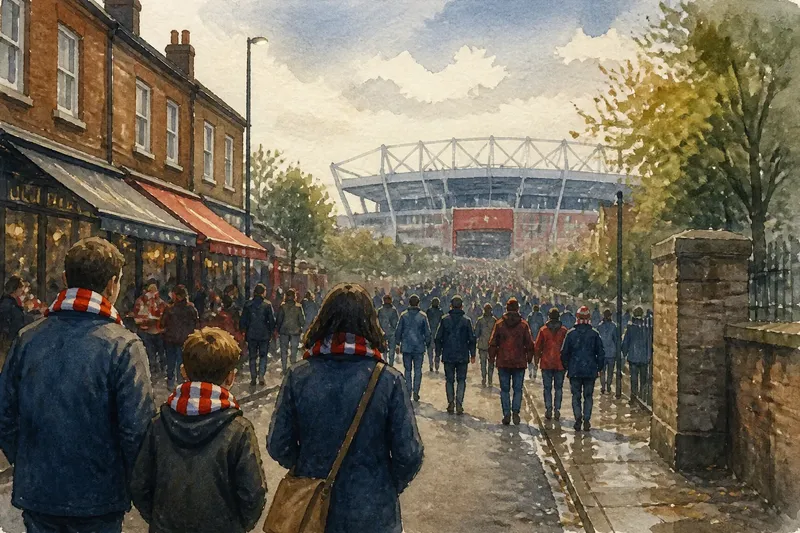
You leave the station with your scarf tucked into your coat, then hear the first chant from a street ahead. The walk to the ground has already begun to feel different from the journey that brought you here. For many supporters, that approach is where matchday’s anticipation gathers: in the changing noise, familiar corners and gradual arrival of other people heading the same way.
Thinking about the walk to the ground as part of the event does not mean making every journey elaborate. It means choosing a route and rhythm that suit your plans, the venue and the people with you. A little preparation can help the final stretch feel welcoming rather than rushed.
What makes the approach feel like matchday?
A venue rarely appears all at once. You may first notice a cluster of scarves, a queue outside a café or the sound of supporters greeting one another. These small signals make the destination feel closer before you can see it.
The route also gives people time to shift attention. On public transport, conversation may still be about work, errands or the weather. As the ground comes into view, those ordinary concerns often give way to the fixture and the shared business of getting inside.
That change is social as well as personal. People walking in the same direction may not know one another, but they can still share a pace, a glance towards the floodlights or a familiar turn towards the entrance. The street becomes a kind of waiting room, except it keeps moving.
How can you plan the route across matchday morning?
Make the route part of a simple plan rather than an extra task. Check the venue’s recommended approach, transport notices and access information a few days beforehand. If you are meeting others, agree on a clear landmark outside the busiest station exits or roads, rather than relying on a message sent once the crowd has thickened.
- Earlier in the week: Check how you will reach the area and whether any streets or entrances have restrictions.
- The day before: Choose a meeting point and agree what to do if someone is delayed.
- Before leaving: Check service updates, the weather and the route from your arrival point to the ground.
- On arrival nearby: Keep together where possible, follow steward directions and leave space for people moving in the opposite direction.
- After the match: Decide whether to leave promptly or wait somewhere suitable for the busiest rush to ease.
Allow the route enough breathing room for the people in your group. A supporter travelling with a child, someone using a mobility aid or a visitor unfamiliar with the area may need a calmer pace and a more direct approach. Accessibility details can vary by venue, so check the ground’s own guidance rather than assuming every entrance or pavement is suitable.
Imagine you are meeting a friend who has never been to the ground. You agree to meet beside a named station exit, check the venue’s access map beforehand and set off with time to pause at a quiet café if the route feels crowded. The likely result is a less hurried arrival and a clearer sense of where to go next, without needing to improvise in the busiest stretch.
Which route suits your kind of arrival?
The shortest route is not always the most comfortable one. A direct road may be busy and noisy, while a slightly longer public footpath could offer more room to walk together. Consider whether your priority is speed, step-free access, a familiar meeting point or time to soak up the atmosphere.
Some people prefer to walk with the largest stream of supporters. Others choose a quieter approach and join the crowd near the ground. Neither choice is more authentic: the useful route is the one that fits your group and leaves you able to enter without a last-minute rush.
Think of the route like a hallway before a room fills for a gathering. It is not the main event, but the way people move through it changes how they meet one another and how they feel when they arrive.
What should you know about the walk to the ground?
Should you follow the biggest crowd?
A large stream of supporters can make the direction of the ground obvious, but it may also move slowly or follow a route that does not suit your needs. Check signs and steward instructions, and use the venue’s recommended approach if you are unsure.
How can you make the walk easier with children?
Choose a recognisable meeting point, keep the route simple and agree what to do if your group gets separated. A quieter pace and a planned stop can be more useful than trying to keep up with the fastest walkers.
What if the usual route feels too crowded?
Do not force your way through a bottleneck. Follow official directions towards another suitable route or wait in a place that does not obstruct others, then continue when movement is easier.
Can the walk be part of the occasion if you arrive alone?
Yes. You can take in the changing signs of matchday at your own pace, without needing to join a group or start conversations. Familiar streets, the growing crowd and the first view of the ground can make the approach feel shared even when you travel by yourself.
How do you make arrival feel like a beginning?
Try not to spend the whole approach watching a screen for updates. Keep your phone available for essential messages, but look up often enough to notice the route: the turn where the ground first appears, the queue forming at a gate or the point where stewards direct people towards different entrances.
If you are with others, a small shared pause can give the walk a natural rhythm. You might stop briefly at a pre-agreed meeting place, check that everyone knows which entrance to use and then continue together. Keep the pause away from narrow pavements and doorways so that other people can pass.
Also leave room for the walk to be ordinary. A missed bus or a stretch of quiet road does not spoil the occasion; the approach is not a performance that has to build perfectly. The walk to the ground matters because it connects the wider day to the place where supporters gather, and a clear, considerate route helps that transition happen on your own terms.
Before you set out, make one final decision: where will your group regroup if someone falls behind? Choose somewhere visible but out of the flow, and tell everyone the name of it. That small detail can make the journey home as well as the arrival feel more settled.